Opinion
Almost Every Retail AI Tool Is Built for a Portfolio You Do Not Have
There are 116,214 shopping centers in the United States. The software serving them is priced and designed for the owners of a few thousand. Here is what that leaves for everyone else.
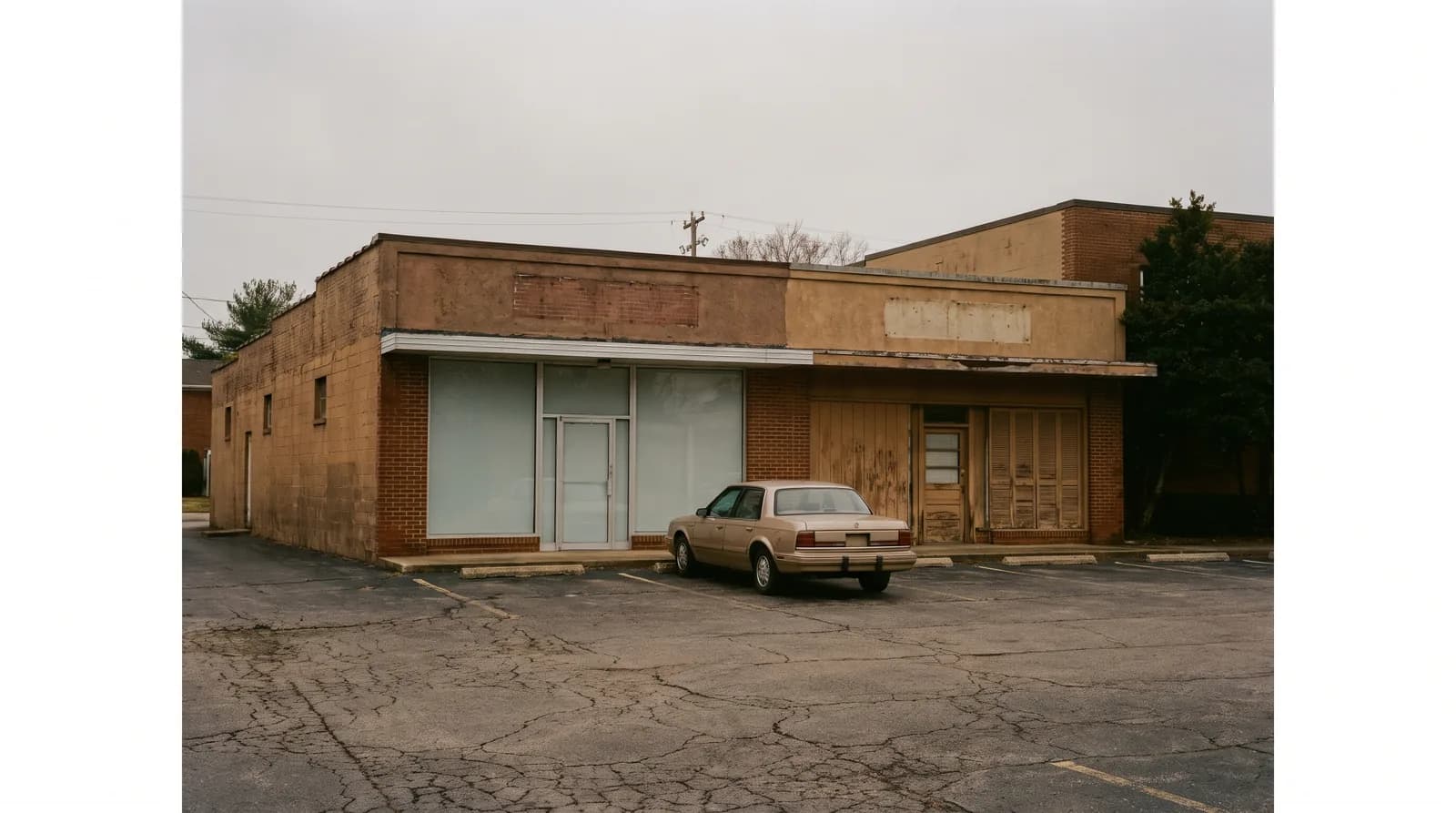
There are 116,214 shopping centers in the United States.
The largest retail owner in the country holds around 15,450 properties. Below that, portfolios drop off quickly: a few owners in the three to four thousand range, more in the one to three thousand range, and plenty of well-known REITs holding somewhere between 88 and 600 assets.
Add every institutional owner together and you do not get close to 116,214.
The rest is the long tail: families, partnerships, small companies, and individuals holding one center, or six, or twenty. That is the largest ownership segment in retail real estate by an enormous margin, and it is the segment almost no software in this category is built for.
How you can tell
Spend a week reading the public pages of AI tools sold into commercial real estate, which is roughly what we do, and a pattern emerges that has nothing to do with features.
Pricing is not published. Across the tools we track, a large share list no price at all. "Contact sales" and "request a demo" are not neutral choices. They signal a sales motion built around a negotiated annual contract, which is only worth a vendor's time above a certain deal size. An owner with six centers is not that deal size, and both parties usually work that out about twenty minutes into a call neither should have taken.
The unit of pricing assumes scale. Per-unit, per-property, and per-seat pricing with stated minimums are common. Minimums are the tell. A per-property price is fine at forty properties and absurd at four.
The workflows assume roles you do not have. Read the feature lists and you find approval chains, analyst dashboards, asset-manager reporting layers, and permissioning for teams. These are not padding, they are genuinely what a large owner needs. They also describe an org chart that a six-center owner does not have, where the same person signs the leases, reviews the CAM schedule, and calls the landscaper.
The case studies are institutional. Vendor case studies feature portfolios in the hundreds. That is a rational marketing choice and it is also a message about who the product is for.
Why it happened
This is not a conspiracy against small owners. It is arithmetic.
Enterprise software economics reward concentration. One customer with 400 properties is dramatically cheaper to acquire and serve than 80 customers with five each, and the contract is larger and lasts longer. Given a choice, a venture-funded vendor will always build for the first customer.
Retail's ownership structure is unusually fragmented compared with the asset classes that attract the most proptech capital. Multifamily has large operators running tens of thousands of units on a handful of platforms. Office has institutional landlords. Retail has 116,214 centers and a very long tail, which is a difficult market to sell into efficiently even when the underlying need is real.
So the capital went where the contracts were, and the tail got a category of software it can technically buy and cannot practically use.
What this actually costs the small owner
Three things, and none of them is "you have worse software."
You over-buy or you don't buy. Faced with enterprise pricing and no middle option, owners either sign something oversized because it was the only real option presented, or conclude the whole category is not for them. The second is more common and more expensive, because the underlying work is genuinely automatable.
You read guidance written for someone else. Most published advice about AI in commercial real estate assumes a team. Applied to a six-center portfolio it produces either paralysis or a project nobody has the hours to run.
You pay the cost in your own time, invisibly. The alternative to software is not zero. It is your Sunday, your bookkeeper's overtime in the first quarter, and the lease clause nobody caught. That cost never appears on a budget line, which is exactly why it persists.
What is actually available at this size
The honest answer is more than owners expect, and it is not where the marketing points.
General assistants are the most underrated tools in the category. Free and low-cost general models handle long-document reading, summarization, and first-pass analysis competently. They are not retail-specific, they integrate with nothing, and for an owner with a handful of centers they solve a real share of the problem at a price that makes experimentation costless. Starting here is not settling. It is correct sequencing.
Free tiers exist and are underused. A meaningful minority of the tools we track let you do real work without talking to anyone. That single attribute matters more at this size than any feature comparison, because it lets you find out whether a tool helps before you have committed anything.
Some genuinely small-portfolio software exists. Commercial-landlord property management priced per property rather than per enterprise seat, and document processing priced per page. It is a shorter list than the category implies, which is why we tag every tool in our database with the portfolio size it realistically serves.
Almost nothing purpose-built for retail at this size exists. This is the honest gap, and no amount of filtering fixes it. The work most specific to owning centers, CAM reconciliation, percentage rent, co-tenancy tracking, is served either by enterprise platforms or by nothing.
The point
The reason we tag portfolio fit on every entry in our database is not organizational tidiness. It is that the most useful thing anyone can tell an owner with six centers is which tools to stop reading about.
The category will eventually notice the tail. The economics that pushed everyone upmarket are the same economics that make an underserved segment of 116,214 properties interesting to somebody eventually. Until then, the practical move is to buy the small things that work, use free tools harder than feels dignified, and treat any product that will not tell you its price as a product that has already told you something.
Sources
- 1ICSC Master Narrative and Supporting Points — 116,214 shopping centers in the U.S., citing the ICSC U.S. Fact Sheet. Figures on that page are dated to the 2017-2018 period and are cited here as an order-of-magnitude count, not as current-year data. https://www.icsc.com/who-we-are/our-mission/icsc-master-narrative-supporting-points
- 2BiSCRED, 'Top Retail & Shopping Center Owners in the U.S. 2026' — property counts for the largest retail and net-lease REITs, including Realty Income (15,450), and mid-size owners in the 88 to 3,771 range. https://www.biscred.com/post/top-retail-shopping-center-owners
- 3Re-Leased, 'Best Property Management Software for Small Landlords' and DoorLoop's comparable roundup — reviewed for how the small-portfolio segment is served and priced. https://www.re-leased.com/software/6-best-property-management-software-for-small-landlords-in-2025
- 4Pricing and packaging observations are drawn from the public pages of the 123 vendors tracked in our own database, snapshotted 2026-07-26. Where a vendor does not publish pricing, we say so rather than estimating.
- 5Disclosure: Woodworks Realty Studio sells services to owners in exactly the segment this piece argues is underserved.
Keep reading
Work With Us
Your team already has AI. Almost nobody uses it.
The licences are bought and the accounts are open, and most of them sit in a tab nobody opens on a Tuesday. Woodworks Realty Studio gets an assistant into the hands of every person on a team, one at a time, each one set up around how that person actually works. My own business runs on it before any of it reaches anyone else.