Workflow
CAM Reconciliation Is the Most Automatable Job in Retail Ownership, and Almost Nobody Has Automated It
Every year you rebuild the same schedule from the same messy inputs, and every year a tenant's asset manager finds something. Here is what actually breaks, and which parts of it a machine can genuinely take.
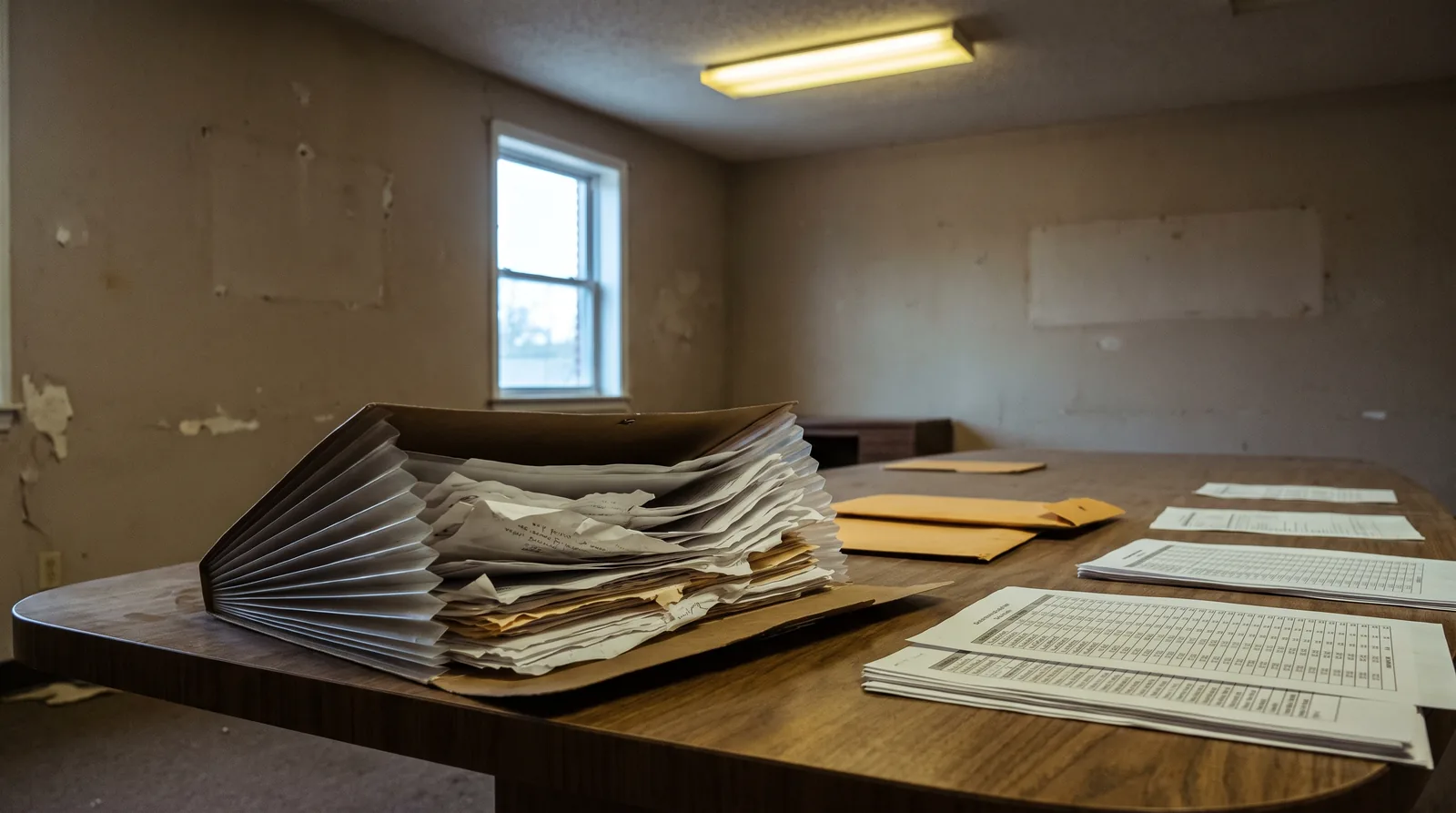
Somewhere in the first quarter, you rebuild the same schedule you rebuilt last year. Twelve months of invoices, a chart of accounts that does not quite map to your pools, a spreadsheet inherited from whoever had the job before you, and a set of leases that each define "common area" slightly differently. Then you send it out, and one tenant's asset manager sends back questions.
This is CAM reconciliation, and among all the work involved in owning retail, it has the strangest profile: it is enormously repetitive, extremely rules-based, and almost entirely un-automated at the scale most owners operate at.
What the job actually is
Tenants pay estimated common area charges monthly, based on the landlord's forecast. Because nobody knows in January what the parking lot will cost in August, those estimates are built from historical data and billed as escrow. At year end the actual costs are known, and reconciliation is the process of comparing what was collected against what the leases say was owed, then billing or crediting the difference. Depending on the lease, the reconciliation is typically due somewhere in the 30 to 90 days following year end.
Allocation is usually pro-rata by usable square footage, so the anchor with the largest footprint carries the largest share of security, landscaping, cleaning, and repairs.
That description makes it sound clean. It is not, for one structural reason: the rules live in the leases, not in the accounting system. Your general ledger knows what you spent. It does not know that one tenant's lease caps controllable expenses at 4% annual increase, that another excludes capital improvements entirely, that a third negotiated out the management fee, and that a fourth measures its pro-rata share against gross leasable area rather than occupied area.
Where it actually breaks
Four places, consistently.
The controllable/non-controllable split. Costs are commonly grouped into expenses the landlord can shop for (landscaping, repairs, administration, garage) and expenses they cannot (most utilities, taxes, insurance). Controllable expenses frequently carry a cap on year-over-year increase. The split matters enormously and it is a judgment call made per invoice, per lease.
Exclusions written in different language across leases. One lease says "capital expenditures." Another says "expenditures of a capital nature under GAAP." A third enumerates. These do not mean identical things, and whoever built last year's schedule made a call about each one that is not written down anywhere.
Gross-ups. When a center is not fully occupied, some leases require variable expenses to be grossed up to a stated occupancy, typically 95%, so an occupied tenant is not penalized for vacancy. Getting the gross-up wrong in either direction is one of the first things a tenant-side auditor checks.
Institutional memory. The person who understands why the schedule looks the way it does is often one person, and their reasoning lives in their head. That is a real operational risk that has nothing to do with software.
CAM is a recurring category of landlord-tenant dispute and litigation, and the legal commentary is consistent about the cause: provisions that are ambiguous about what may be included and how it is allocated. Ambiguity in the lease becomes disagreement at reconciliation.
What a machine can genuinely take
Be precise about this, because the vendor pitch is usually broader than the reality.
It can read the leases and build the rule set. This is the highest-value and lowest-risk piece. Extracting each tenant's pro-rata basis, cap structure, exclusion language, gross-up provision, and audit rights into one structured table is exactly what document-intelligence tools are now good at. It replaces the part of the job that is reading, not the part that is deciding.
It can classify invoices against the rule set. Given a chart of accounts and twelve months of invoices, sorting into pools and flagging the controllable/non-controllable call is mechanical once the rules exist.
It can find the disagreements before your tenant does. Run the schedule you produced against the extracted lease terms and surface the mismatches: an expense allocated to a tenant whose lease excludes it, a cap that was not applied, a gross-up that was not run. This is the same work a tenant's auditor does, performed on your side first.
It can write down the reasoning. Every judgment call recorded with the lease language it came from. That alone addresses the institutional-memory problem, and it is worth doing even if you automate nothing else.
What it should not take
The judgment calls themselves. Whether a $40,000 parking lot repair is a capital improvement or a repair is a question with money and a lease argument attached. A machine can present the language and flag that the two leases treat it differently. It should not decide.
The tenant relationship. A reconciliation that arrives with a large true-up and no explanation starts a fight regardless of how correct it is.
The final numbers, unchecked. Extraction is good, not perfect, and the clauses most likely to be misread are exactly the high-variance ones: caps, exclusions, gross-ups. Anything a system produces here needs a human who knows the center to look at it before it goes out.
The realistic sequence
If you own between one and thirty centers and you are doing this in a spreadsheet:
- Extract the CAM terms from every lease into one table first. Do this before buying any reconciliation software. It is the input everything else needs, and having it is valuable even if you change nothing else.
- Reconcile one center manually against that table. You will find where last year's schedule and the actual lease language disagree. That is the real finding.
- Only then automate the repetitive middle. Invoice classification and pool allocation, with the extracted rules as the reference.
- Keep a human on the output. Permanently, not as a transitional measure.
The reason to start with extraction rather than software is that the extraction is the part that compounds. The table you build is useful at reconciliation, at sale, at refinance, and every time somebody asks what a lease actually says. The reconciliation schedule is useful once a year.
The honest summary
CAM reconciliation looks like an accounting problem and is actually a document problem. The costs are already in your general ledger. What is not anywhere structured is the set of rules governing how those costs get divided, and those rules are sitting in PDFs.
That is why it is the most automatable job in retail ownership and why almost nobody has automated it. The tools were built for the accounting half. The hard half was always the reading.
Sources
- 1Tango Analytics, 'What You Need to Know About CAM Reconciliation' — definitions of pro-rata allocation, estimated escrow billing, controllable vs non-controllable expense categories, and the 30-90 day post-year-end reconciliation window. https://tangoanalytics.com/blog/cam-reconciliation/
- 2Maddin Hauser, 'Common Area Maintenance Provisions in Commercial Leases Should Provide Uncommon Detail and Clarity' — on ambiguity in CAM provisions as a source of litigation. https://www.maddinhauser.com/common-area-maintenance-provisions-in-commercial-leases-should-provide-uncommon-detail-and-clarity/
- 3Jimerson Birr, 'Disputes Involving Common Area Maintenance (CAM) Charges and Alterations' — CAM as a recurring category of landlord-tenant litigation. https://www.jimersonfirm.com/services/landlord-tenant-leasing-commercial/disputes-involving-common-area-maintenance-cam-charges-and-alterations/
- 4Mohr Partners, 'Mastering CAM Audits' — tenant-side audit practice and what auditors look for. https://mohrpartners.com/global-lease-serv-bl/cam-audits-common-area-maintenance/
- 5G Squared CFO, 'CAM Reconciliation Accounting Best Practices for Property Managers' — reconciliation mechanics and common accounting errors. https://www.gsquaredcfo.com/blog/cam-reconciliation-accounting
- 6Disclosure: Woodworks Realty Studio builds document-intelligence systems for retail owners, including work of the kind described in the second half of this piece.
Keep reading
Work With Us
Your team already has AI. Almost nobody uses it.
The licences are bought and the accounts are open, and most of them sit in a tab nobody opens on a Tuesday. Woodworks Realty Studio gets an assistant into the hands of every person on a team, one at a time, each one set up around how that person actually works. My own business runs on it before any of it reaches anyone else.