Workflow
Entitlement Research Is Public, Scattered, and Perfect for AI
Every jurisdiction publishes its zoning code, its review process, and its meeting minutes. Almost none of it is searchable in any useful way, which is exactly the problem this technology solves.
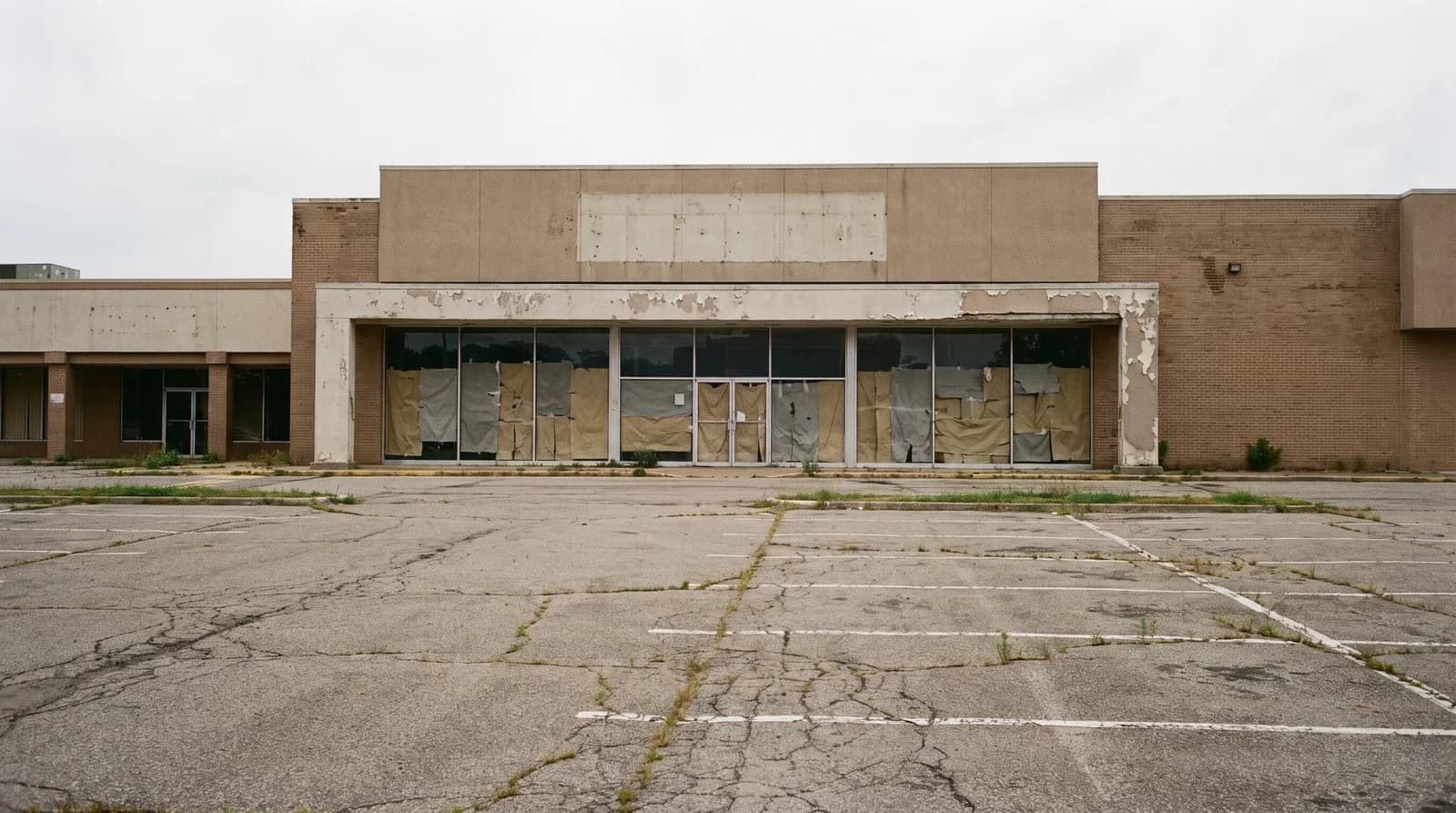
If you own an aging center, the redevelopment question arrives eventually. Convert the vacant anchor. Split the box. Add a pad. Change a use. And the first real cost is not construction. It is finding out whether you are allowed.
That work has an unusual shape: the information is entirely public and almost entirely unusable.
Every jurisdiction publishes its zoning code. Most publish their development review process, often in genuine detail, laying out the stages a project moves through and which body approves what. Meeting agendas and minutes are posted. Many codes now live on searchable online code platforms.
None of that means you can answer a question.
Why public does not mean accessible
Four reasons, and they compound.
The answer is assembled, not looked up. Whether you can add a drive-through requires the base zoning district, the use table, any overlay, the parking requirement, setbacks, drive-through-specific conditions, and whether the use is permitted by right, conditionally, or not at all. Six or seven documents, each written for a reader who already knows the structure.
Process and code are published separately. The code tells you what is allowed. The process documents tell you which board hears it, what triggers a public hearing, and how the stages sequence. Owners routinely learn the substantive answer and miss that it requires a nine-month path through three bodies.
Precedent is in the minutes. What a board has actually approved on similar parcels is often more predictive than what the code appears to permit. That lives in years of meeting minutes and staff reports, in PDFs, unindexed.
It is different everywhere. A retail owner with centers in three jurisdictions faces three unrelated regimes, with different terminology for the same concepts.
The result is that most small owners either pay a consultant to answer a preliminary question, or never ask it. The second is more common, and it means redevelopment options go unexamined for years.
Why this is a strong AI use case
This work is genuinely well matched to what current tools do well, more so than most things sold to real estate.
The source material is public, textual, and stable. Nothing is confidential, nothing is a trade secret, and codes change slowly. Zoning language is dense but formulaic. Cross-referencing between documents is exactly the mechanical work that eats a professional's afternoon.
Most importantly, the output is a research memo, not a decision. Nobody is going to build off a model's opinion. The deliverable is "here is what the code says, here is where it says it, here is what remains unclear," which is a shape that tolerates imperfection because every claim is checkable.
Compare that to lease abstraction, where a wrong extracted value silently enters a schedule. Here, a wrong reading gets caught the moment a professional opens the cited section.
The workflow that works
Five steps, in order.
1. Establish the parcel facts first. Parcel number, jurisdiction, base zoning district, overlays, lot dimensions, current legal use. County GIS and assessor records are authoritative and free. Do not let a model infer any of this. Look it up and write it down.
2. Pull the actual code sections rather than asking for a summary. Get the use table, the dimensional standards, the parking requirements, and any overlay text into one place as source text. The question you are answering is "what does this say," and you cannot answer it from a paraphrase.
3. Ask narrow questions against that source. Not "can I add a drive-through." Instead: is this use listed in the use table for this district, and under what classification; what are the parking requirements for it; what setbacks apply; does the overlay modify any of it. Narrow questions with cited answers.
4. Ask what is missing. The most useful output is the list of things the code does not resolve, which is where your consultant's time should actually go. A good research pass ends with open questions, not confident conclusions.
5. Then read the process documents to build the path. Which body approves this, is a hearing required, what is the sequence. This is where a plausible-looking substantive answer meets the reality of the calendar.
At the end you have a memo with citations, an explicit list of unknowns, and a rough path. That is what you take to a land use attorney, and it makes that engagement shorter and cheaper because you are asking specific questions instead of paying someone to start from the parcel number.
What to be careful about
Codes are amended. A model may be working from a stale version. Always verify the current text on the jurisdiction's own platform and note the date.
Never rely on a generalized timeline. Review durations vary enormously by jurisdiction and project type, and any number a model volunteers is likely to be invented. Get the schedule from the jurisdiction's published process, or from a call to the planning counter.
Interpretation is not text. How a planning department reads an ambiguous provision is a fact about that department, not about the code. Staff will often tell you directly if you ask, and that conversation is not replaceable.
This does not replace a land use attorney. It replaces the first three hours of one.
The summary
Entitlement research is the strongest AI use case in retail ownership that almost nobody is using it for. The information is public, the work is mechanical cross-referencing, every output is checkable against a citation, and the alternative is either an expensive preliminary engagement or, more often, not asking at all.
The value is not that you skip the professionals. It is that you arrive at them already knowing which question you are asking.
Sources
- 1Montgomery County Planning Department, 'Development Review Process' — an example of a published, multi-stage municipal review sequence. https://montgomeryplanning.org/development/development-review-process/
- 2Howard County, Maryland, 'Development Process and Procedures'. https://www.howardcountymd.gov/planning-zoning/development-process-and-procedures
- 3City of Long Beach, 'Entitlement Process' — municipal entitlement definitions and application types. https://longbeach.gov/lbcd/planning/current/entitlement-process/
- 4City of Charlotte, 'Commercial Plan Review Process'. https://www.charlottenc.gov/Growth-and-Development/Getting-Started-on-Your-Project/Commercial-Plan-Review
- 5Community Law Center, 'Guide to the Development Process in Baltimore City' (2019). https://communitylaw.org/wp-content/uploads/2019/04/CLC_GuidetotheDevelopmentProcessinBaltimoreCity_2019.pdf
- 6West Palm Beach municipal code, downtown master plan development approval process, as an example of code published in a searchable online code platform. https://online.encodeplus.com/regs/westpalmbeach-fl/doc-viewer.aspx?secid=253
- 7Timelines vary enormously by jurisdiction and project type. This piece deliberately gives no generalized duration figure, because no defensible national average exists.
- 8Disclosure: Woodworks Realty Studio builds document and research systems for retail owners, including work of this kind.
Keep reading
Work With Us
Your team already has AI. Almost nobody uses it.
The licences are bought and the accounts are open, and most of them sit in a tab nobody opens on a Tuesday. Woodworks Realty Studio gets an assistant into the hands of every person on a team, one at a time, each one set up around how that person actually works. My own business runs on it before any of it reaches anyone else.